
APN-PAD is pleased to announce a new and exciting project that fills a void in the acknowledgement, recognition, and contribution of People of African descent in Asia Pacific mainstream societies. APN-PAD co-founder and director of research and academic engagements Muhammad Dan Suleiman, PhD, will coordinate our landmark 2025 project titled:
"Living African Across the Indian Ocean: Stories of African Descent in the Asia-Pacific"

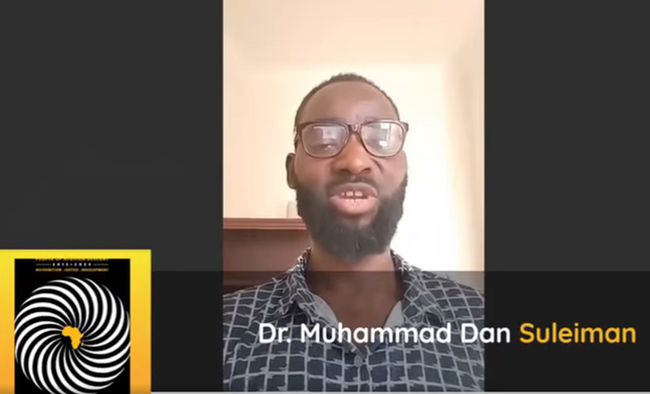
Dr. Suleiman is an accomplished academic both in Australia and Saudi Arabia, as a senior PAD fellow, he will coordinate this project ensuring that the voices and stories, feelings of belongings and identity of People of African Descent across the Asia Pacific Region are captured in a book to be published at the end of 2025. This is in response to the need to expand the visibility of People of African Descent especially within the context of the United Nations Second International Decade for People of African Descent, 2025-2035.
Major contributors to this flagship project will include co-founders of and executive team of APN-PAD because of their deep knowledge, research, advocacy, and connection with People of African Descent in Asia Pacific region.
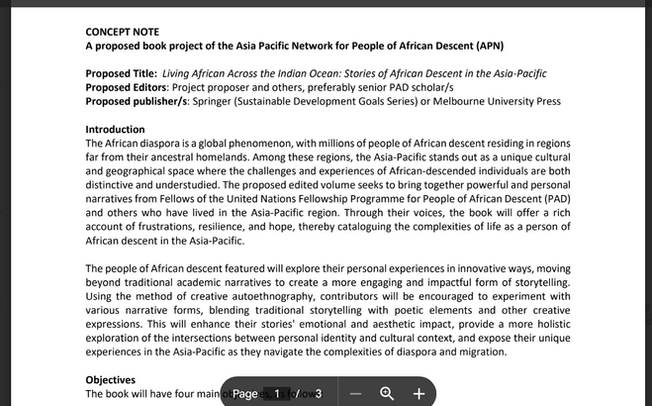
Here is a concept note:
CONCEPT NOTE
A proposed book project of the Asia Pacific Network for People of African Descent (APN-PAD)
Proposed Title: Living African Across the Indian Ocean: Stories of African Descent in the Asia-Pacific
Proposed Editors: Project proposer and others, preferably senior PAD scholar/s
Proposed publisher/s: Springer (Sustainable Development Goals Series) or Melbourne University Press
Introduction
The African diaspora is a global phenomenon, with millions of people of African descent residing in regions far from their ancestral homelands. Among these regions, the Asia-Pacific stands out as a unique cultural and geographical space where the challenges and experiences of African-descended individuals are both distinctive and understudied. The proposed edited volume seeks to bring together powerful and personal narratives from Fellows of the United Nations Fellowship Programme for People of African Descent (PAD) and others who have lived in the Asia-Pacific region. Through their voices, the book will offer a rich account of frustrations, resilience, and hope, thereby cataloguing the complexities of life as a person of African descent in the Asia-Pacific.
The people of African descent featured will explore their personal experiences in innovative ways, moving beyond traditional academic narratives to create a more engaging and impactful form of storytelling. Using the method of creative autoethnography, contributors will be encouraged to experiment with various narrative forms, blending traditional storytelling with poetic elements and other creative
expressions. This will enhance their stories' emotional and aesthetic impact, provide a more holistic exploration of the intersections between personal identity and cultural context, and expose their unique experiences in the Asia-Pacific as they navigate the complexities of diaspora and migration.
Objectives
The book will have four main objectives, as follows:
To Illuminate Diverse Experiences: To highlight the diverse challenges and experiences faced by people of African descent living in the Asia-Pacific region, from racial discrimination to cultural adaptation.
To Foster Understanding: To provide readers with a nuanced understanding of the complexities of diaspora and migration, particularly in Asia-Pacific.
To Showcase Resilience: To document the resilience and hope that characterise the lives of African-descended individuals as they seek recognition, justice, and development across two worlds.
To Innovate Storytelling: To encourage contributors to experiment with creative autoethnography, blending traditional storytelling with creative expressions to enhance their narratives' emotional and aesthetic impact.
Methodology
Through the creative autoethnographic method, contributors will combine autoethnography's reflective and introspective aspects with the imaginative and expressive potentials of creative writing and art. Contributors will be encouraged to:
Blend narrative forms: Experiment with various narrative forms, including traditional storytelling, poetry, visual art, and other creative expressions.
Reflect on personal experiences: Participants engage in deep self-reflection to explore how the cultural, social, and geographical contexts of the Asia-Pacific have shaped their identities and experiences.
Express emotional and aesthetic dimensions: Use creative elements to convey the emotional and aesthetic dimensions of their experiences, thereby providing readers with a more holistic
understanding of their lives.
Structure of the Book
The book will be structured into thematic sections, each focusing on the contributors' experiences:
Section 1, on Crossing Boundaries, will explore the initial challenges of migration, including the experience of leaving home, adjusting to new cultural environments, and navigating the complexities of identity in a foreign land.
Section 2, on Confronting Discrimination, will allow contributors to share their encounters with racial discrimination and systemic inequalities in Asia-Pacific countries, shedding light on the struggles for recognition and justice.
Section 3 will be on Reconciling Heritage and Reality. This section will focus on how contributors reconcile their African cultural heritage with the new realities of living in the Asia-Pacific, exploring themes of cultural preservation, adaptation, and transformation.
Section 4, dedicated to stories of Resilience and Hope, will celebrate the resilience and hope that have enabled contributors to overcome challenges and thrive in their new environments, offering readers a message of strength and determination.
Target Audience
The book will be intended for a broad audience, including those interested in diaspora studies, migration, identity, and race relations, particularly in the Asia-Pacific; individuals interested in personal narratives and stories of resilience, identity, and cultural diversity; and those working in areas related to migration, social justice, and development, particularly in the Asia-Pacific region.
Relevance to the United Nations and the Fellowship Program for PAD
The proposed book is highly relevant to the United Nations (UN) and the Office of the High Commissioner for Human Rights (OHCHR), notably its Fellowship Program for People of African Descent. The book aligns with several key objectives and mandates of the UN and OHCHR, particularly in human rights, social justice, and the empowerment of marginalised communities.
Alignment with the UN's Mandate on Human Rights and Social Justice
The UN is committed to promoting and protecting human rights for all individuals, particularly those from marginalised and vulnerable communities. The book highlights the lived experiences of people of African descent in the Asia-Pacific, focusing on their struggles for recognition, justice, and equality. By bringing these stories to the forefront, the book contributes to the UN's broader goal of addressing human rights violations and advocating for social justice.
Relevance to the OHCHR's Fellowship Program for People of African Descent and Second International Decade for People of African Descent, 2025-2035.
The UN declared 2015-2024 the International Decade for People of African Descent (PAD), and 2025-2035 The Second International Decade for People of African Descent focusing on recognition, justice, and development. This book is a timely contribution to the Decade's objectives, as it documents the lived experiences of African-descended individuals in the Asia-Pacific. It highlights their struggles for recognition and justice and explores their contributions to development in their countries of residence and their countries of origin. The PAD program empowers individuals of African descent by enhancing their human rights and advocacy knowledge. The book extends this empowerment by providing a platform for Fellows to share their narratives and insights, thereby contributing to the global discourse on the rights and experiences of people of African descent.
Similarly, one key objective of the OHCHR's Fellowship Program is to increase the visibility of issues affecting people of African descent. This book directly supports this objective by documenting and disseminating the personal stories of African-descended individuals in the Asia-Pacific. These stories bring attention to the unique challenges faced by this community, such as racial discrimination, cultural marginalisation, and the quest for justice, thereby amplifying their voices on a global stage.
Contribution to Broader UN Goals
The book aligns with several SDGs, especially SDG 10 (Reduced Inequalities) and SDG 16 (Peace, Justice, and Strong Institutions). On SDG 10, the book contributes to reducing inequalities within and among countries by addressing racial discrimination and social exclusion. The book's focus on justice and the experiences of marginalised communities supports the goal of promoting peaceful and inclusive societies. The book's exploration of racial discrimination and systemic inequalities contributes to the UN's ongoing efforts to combat racism and promote racial equality worldwide. By documenting the personal stories of individuals who have confronted these issues, the book adds depth to the global understanding of racism's impact and the ongoing struggle for equality.
Relevance to the Asia-Pacific Pad Network
The proposed volume will help advance the objectives of the APN. It will help establish credibility and legitimacy and create a foundational narrative for the network. The book will also facilitate PAD’s community engagement in Asia-Pacific and help attract support and partnerships. As a new organisation, the Network also needs to contribute to knowledge production about the African diaspora in the Asia-Pacific. The book will provide a critical resource in this regard, create a platform for advocacy, and inspire future membership and participation.
Timelines
Approval by APN and relevant agencies: October 30, 2024
Deadline for sending abstracts (open call and by invitation): February 28, 2025
Notification of decision on submitted abstracts: March 20, 2025
First draft of contribution due: June 15, 2025
Editors’ feedback on a draft of chapters: July 30, 2025
Second draft of chapters: August 25, 2025
Submission of complete manuscript to Publisher: October 15, 2025
Expected publication: December 2025
